Need a quick response? Call 888-959-0772. Email: quotes@movieinsure.com (reply may take longer)

Complete Stunt Insurance Guide: Coverage for Every Stunt Type

Every stunt type requires specialized insurance and different requirements. This guide covers only some of the many options.

Why Stunt Insurance is Different from Regular Production Insurance?

Stunt insurance is not included in standard film production packages; it is an add-on rider applied directly to your underlying General Liability policy

The Reality

What Happens Without Coverage

Key Difference

How Stunt Insurance Works (7-Step Process)

Watch: Filming a stunt? How stunt insurance works

4 Weeks Before

Step 1: Hire a Coordinator

Before approaching underwriters, hire a professional stunt coordinator. Most insurance carriers will not issue a quote without an experienced professional attached to the production

3 Weeks Before

Step 2: Map Out Your Script

Identify and extract every stunt in the script. Document them in extreme, granular detail—including choreography maps, locations, and planned safety buffers

2Weeks Before

Step 3: Submit to your Broker to Get Quotes

Provide your final script, line-item stunt list, and overall budget to MovieInsure.com. Our team compiles this data to approach niche entertainment underwriters for accurate quoting.

2 Weeks Before

Step 4: Underwriter Review and Approval

Submit the formal safety plans designed by your coordinator. The underwriter reviews the specialized stunt rider modifications, approves the risk, and issues your Certificate of Insurance (COI).

Action Phase

Steps 5-7: Shoot Safely

Get COI. Coordinator runs stunts EXACTLY as planned. Report any deviations immediately.

Stunt Insurance Costs by Category

Base Stunt Coverage Addition

* Base stunt rider: DOES NOT EXIST
*All Stunts must be scheduled to be covered
* Additional per-stunt: +$150-$5000 each
* More stunts = volume discount possible (call to discuss)
* (no workers comp included)

Cost Factors

* Complexity of stunt
* Number of stunt performers
* Experience level * Safety equipment required
* Duration
* "More dangerous = more expensive"

Fight Choreography & Combat Stunts (+$250-$1,000 per scene)

Choreographed hand-to-hand combat, sword fights, boxing, martial arts

Fist Fight / Bar Brawl

(+$250-$750)

  • Requirements: Fight choreographer, safety plan
  • Safety: Padding, proper surfaces, control

Sword Fight

(+$250-$1,000)

  • Requirements: Sword master, weapon handler, safety plan
  • Safety: Blunt/practice swords, proper distance

Martial Arts Sequence

(+$250-$750)

  • Requirements: Martial arts stunt performers, fight choreographer, safety plan
  • Safety: Protective gear, proper medical staff

Professional Boxing/Wrestling

(+$350-$1K)

  • Requirements: Professional boxer/wrestler, safety plan
  • Safety: Protective gear, proper medical staff

Safety Requirements

  • Choreography must be rehearsed (min 5 run-throughs).
  • All movements pre-planned (no improvisation)
  • Protective equipment (padding, helmets if needed)
  • Medical staff on standby
  • Safety = lower cost. Recklessness = denied coverage

For standard fist fights or bar brawls, underwriters require rigorous safety protocols. This includes the use of custom padding, shock-absorbing flooring hidden from camera angles, and precise, slow-motion rehearsals prior to full-speed execution.

Vehicle Stunts

(+$800-$3,000+)

High-Speed Driving / Car Chase

(+$250-$1,250)

  • Requirements: Precision driver, closed course/permit, safety plan
  • Safety: Professional driver, safe course, emergency services nearby

Precision Driving

(+$800-$1.5K)

  • Examples: 180s, doughnuts, controlled slides
  • Requirements: Precision driver, closed course
  • Safety: Controlled environment, emergency services

Rollover / Flip

(*****)

  • CALL

Car Crash / Collision

(*****)

  • CALL

Vehicle Into Water

(+$1.5K-$2.5K)

  • Requirements: Water stunt specialist, SCUBA team, safety boats
  • Safety: Professional driver, rescue team, controlled water

Motorcycle/Bike Stunts

(+$250-$750)

  • Stunts: Wheelies, jumps, precision riding, crashes
  • Requirements: Stunt motorcycle rider, closed course
  • Note: Motorcycle experts command premium rates

Requirements for ALL vehicle stunts

  • Driver: Professional stunt driver (not actor)
  • Location: Closed course or controlled environment
  • Equipment: Safety harnesses and reinforcements
  • Emergency Support: Emergency services on standby
  • Documentation: Pre-engineering documentation (for crashes/flips)
  • Permits: Approval from local authorities
  • Insurance: Insurance company approval required

Fall Jumps & High-Wire Stunts

(+$600-$2,500)

Simple Fall (under 3 feet)

(+$0-$500)

  • Height: UNDER 3 feet
  • Safety: Crash pads, proper technique, spotters

Falling Through Objects

(+$0-$500)

  • Requirements: Stunt person, pre-engineered breakaway materials
  • Safety: All materials pre-tested for safety

High Fall (15+ feet)

(+$750+)

  • Height: 15 feet and up
  • Requirements: Expert high-fall stuntman, high-end rigging, crane
  • Safety: Multiple safety layers, professional rigging company, medical team
  • Note: Most expensive and dangerous stunt category

Medium Fall (over 3 feet)

(+$350 - $750)

  • Height: 3 to 15 feet
  • Requirements: High-fall specialist, airbag system, rigging
  • Safety: High-tech airbags ($10K+ equipment), multiple spotters

Jump Between Buildings/Roofs

(+$1K-$2K)

  • Requirements: Stunt jumper, rigging/safety lines
  • Safety: Safety harness/lines, spotters, controlled environment

Ramp Jumps / Vehicle Launches

(****)
* CALL

High-Wire/Tightrope Work

Safety Requirements

  • Planning: All heights pre-calculated
  • Testing: Landing surfaces pre-tested
  • Equipment: Multiple safety lines and harnesses
  • Personnel: Professional spotters on ground
  • Medical Support: Medical team on standby
  • Note: Height = exponential cost increase

Fire Burns & Fire Stunts

(+$1K-$3K+)

Body Burn (Limited) (+$750-$2,500)

* Duration: 3-10 seconds typically
* Requirements: Professional burn stuntman, fire safety officer, medical team
* Safety: Protective gel/suit, fire extinguishers standby
* "Very specialized - not many stunt people do this"

Fire Explosion / Controlled Fire (+$500-$3K+)

* Requirements: Licensed pyrotechnician, fire safety officer
* Safety: Pre-calculated blast radius, safety perimeter, fire suppression

Full Body Burn (+$1,500-$5K+)

* Duration: 3-15 seconds
* Requirements: Expert burn specialist, fire chief, medical team, safety perimeter
* Safety: Multiple safety layers, professional supervision, immediate rescue plan
* "Most expensive stunt type - extreme risk"

Stunt in Burning Environment (+$750-$5K)

* Examples: Actor performs stunt in hot/smoky environment
* Requirements: Stunt performer + fire safety officer
* Safety: Protective gear, smoke-free air, temperature monitoring

Fire Stunt Safety Requirements

* Licensed burn specialist (not just any stunt person)
* Fire safety officer on set (often fire department)
* Medical team with burn treatment knowledge
* Fire suppression equipment immediately available
* Protective gel/suit under clothing
* Limited duration (safety reasons)
* "Fire stunts are most highly regulated"

Pyrotechnics & Explosions

(+$250-$5K+)

Small Pyro Effects

(+$250-$1K)

Medium Explosion

(+$500-$2.5K)

Large Explosion

(+$2.5K-$5K+)

Explosion with Stunt

Base explosion + stunt cost

Pyro Safety Requirements

Water Stunts & Underwater

(+$800-$2K+)

Water Vehicle Stunts

(+$250-$1.5K)

  • Requirements: Boat operator, water safety officer, stunt coordinator

Drowning Sequence

(+$350-$1.5K)

  • Requirements: Professional safety diver, water safety specialist

Underwater Sequences

(+$250-$1K)

  • Requirements: Scuba-certified stunt person or trained actor, safety divers, dive master
  • Safety: All Multiple safety divers, communication systems

Waterfall / Rapid Stunts

(+$750-$2.5K)

  • Requirements: Expert water stunt person, river safety specialist
  • Uncontrolled water = higher risk

Swimming / Diving (Non-Stunt)

(+$200-$750)

  • Requirements: Safety diver, water safety officer

Water Stunt Safety Requirements

  • Professional safety diver(s) in water with actor
  • Water safety officer supervising
  • Immediate rescue capability
  • Medical team trained in water rescue/drowning
  • Safety equipment (life jackets, rescue boats)
  • Communication systems
  • Limited duration (actor safety)
  • Weather-dependent
  • Water is one of the hardest elements to control

Animals Stunts

(+$800-$3K+)

Horse Stunts

(+$200-$2.5K)

  • Examples: Horse falls, riding sequences, stampedes
  • Requirements: Professional horse stunt trainer, veterinarian
  • Safety: Proper training, controlled environment
  • Note: Horse stunts common in period films

Animal Attack / Dangerous Interaction

(******)
* CALL

  • Requirements: Professional animal trainer, behavior expert
  • Safety: Trainer control, safe boundaries

Animal Fall / Injury Simulation

(+$200-$1.5K)

  • Requirements: Animal trainer, veterinarian, stunt coordinator
  • Safety: No actual harm (trick choreography), vet supervision
  • Note: Most controversial – must be completely safe

Riding Stunt (Mounted)

(+$200-$1K)

  • Examples: Mounted fight, riding sequence, chase
  • Requirements: Stunt rider (horseman), horse trainer

Animal Stunt Safety Requirements

  • Every animal action is rehearsed with the trainer first.
  • All movements pre-planned (no improvisation)
  • Trainer or wrangler in control at all times; vet on call
  • Medical staff on standby
  • Safety = lower cost. Recklessness = denied coverage

High-Risk / Specialized Stunts

Helicopter / Aerial Vehicle

(+$500-$1.5K+)

Precision Rigging / Wirework

(+$350-$1.5K)

Multi-Stunt Coordination

(+$1K-$3K+)

More stunt types & the rules that matter

Drones, weapons & railroad scenes

Drones on set

Drone shots are declared whether the drone is owned or rented. Small camera drones flown within the pilot's line of sight are the usual case. The pilot should be FAA Part 107 certified, and most locations ask for proof plus a certificate of insurance naming them. Coverage for the drone and camera themselves can be added.

See our drone insurance page for the full picture.
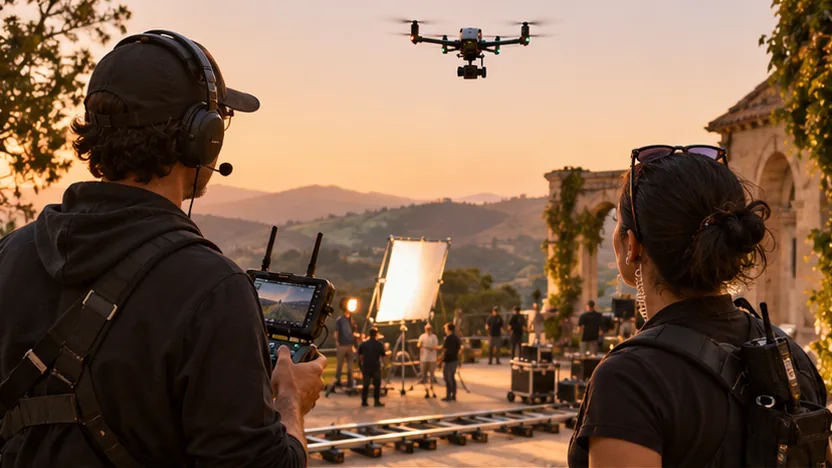
Drone pilot with a controller and a spotter beside him flying a small camera drone over a film set at sunset

Weapons, blanks & squibs

Any weapons scene is declared: blanks, prop guns, knives and blades, squibs, or a combination. A qualified armorer should control every weapon on set, weapons are never pointed at anyone, and a fight that uses a weapon is declared as a fight with weapons. Squibs and bullet hits also follow the pyro rules.

Railroad scenes

Stations, inactive track and scenes with trains can be declared. Railroads almost always ask for Railroad Protective Liability before they give access, which is different from a railroad endorsement on the production policy. Filming on active track needs its own policy, which we arrange. See Railroad Protective.
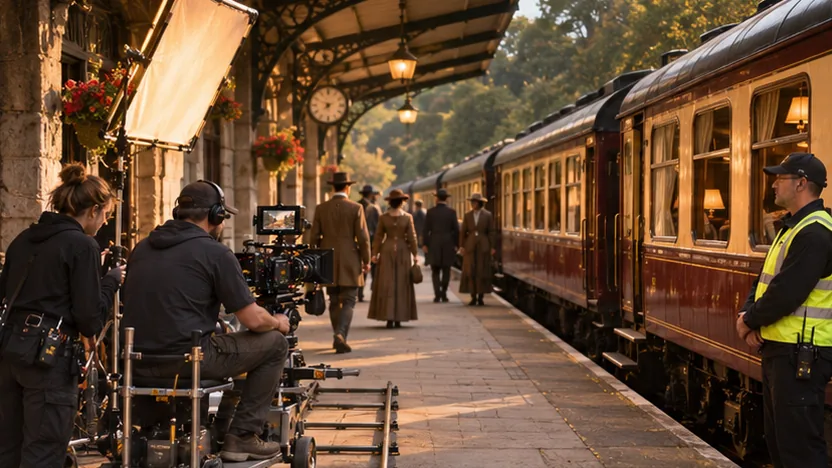
Film crew shooting at a historic train station platform beside a parked vintage train, with a safety person in a high-visibility vest

Can't be insured vs. needs its own policy

Very few things are truly uninsurable. Far more often, something simply sits on a separate policy alongside your production coverage.

Needs its own policy (we arrange it): aircraft, boats, and filming on an active railroad track. These are insured on a separate policy alongside your production policy, not as a stunt scene. Can’t be insured: venomous snakes, sharks, jellyfish, piranha, sea mammals unless filmed from land, and a short list of dog breeds.

The people: workers' comp & your cast

When your actor does the stunt

If a principal actor does any part of a stunt, tell us before the shoot. Cast underwriters may exclude the stunt or add terms, and medicals may be required for covered cast. For most stunts, the actor does the close-up and a stunt double in the same costume does the rest.

Stunts & workers' comp

Falls of 3 feet or less, drones, pets, allowed dogs, farm animals (not horses), caged zoo animals and wild birds can usually sit alongside workers' comp. Most other stunts, all pyro, all driving, horses, wild animals and railroad scenes can't. If you need both, tell us both and we'll help you set it up.
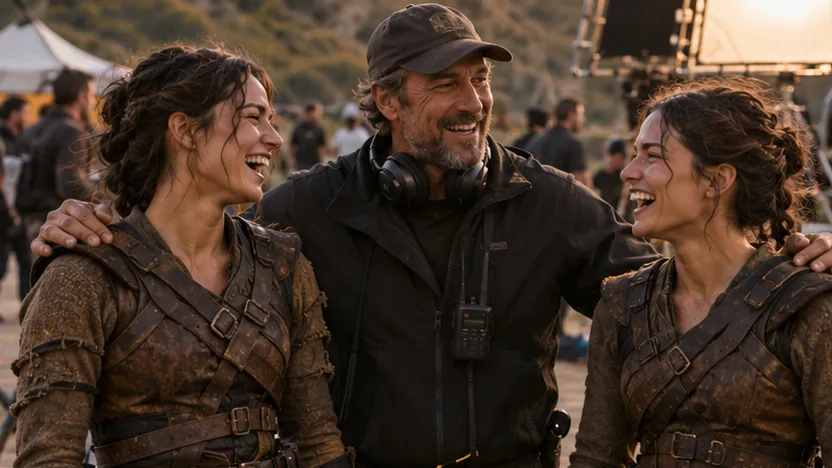
Actor and stunt double in identical costumes laughing with the stunt coordinator on set

Four rules on every stunt

A coordinator, every time

A qualified stunt coordinator is always required when stunts are declared.

Per scene, retakes included

Each scene with a stunt is declared once. Retakes of the same stunt in that scene count as one stunt scene.

Shoot it as declared

A higher fall, a closer effect or a faster car is a different stunt. Tell us before you shoot it.

Workers' comp

Many stunts can't share a policy with workers' comp. If you need both, tell us both and we'll help you set it up.

Stunts by program

The same stunt types are available on all three programs. What changes is how you add them:

Short Term

Added online, scene by scene, when you buy the policy for the production.

DICE / Annual

Excluded until each shoot with stunts is scheduled onto the policy.

Production Portfolio

Reviewed with the script, a stunt questionnaire and the coordinator’s résumé.

Get a Stunt QuoteCall 1.888.959.0772

Common Stunt Insurance Mistakes

Mistake 1

Thinking you can do the stunt yourself

Insurance: Won’t cover untrained performers | Fix: Hire professional

Mistake 2

Not getting pre-approval

Insurance: Won’t cover unapproved changes | Fix: Get approval before shoot

Mistake 3

Changing stunt on set

Insurance: Only covers what was approved | Fix: Get new approval first

Mistake 4

Hiring non-professional stunt team

Insurance: Requires professional certification | Fix: Hire SAG-approved stunt professionals

Mistake 5

Not having proper safety plan

Insurance: Requires written documentation | Fix: Hire coordinator to create formal plan

Mistake 6

Doing stunt without medical team

Insurance: Requires appropriate medical staff | Fix: Have medic on set for dangerous stunts

Stunt Insurance FAQs


Even simple stunts need approval. Simple fall might add $500, but still needs: professional performer, safety plan, pre-approval.
Legally? Maybe you can try. But one injury = liability claim = you pay everything. Not worth risk.

This is contemplated on a case-by-case basis.


Sometimes. Use better camera angles, VFX instead, safer stunt version. Often cheaper.


Very detailed. Underwriter needs exact description, safety measures, trained personnel, rehearsal plan.


Coverage covers approved stunt performed as planned. Deviations from plan may not be covered.

Prefer online application?

Short term production on-line app

Watch the video

Each video page includes the full transcript. See all MovieInsure videos

MovieInsure Film Production Insurance Logo

We respect our clients' privacy and are dedicated professionals serving one of the greatest industries in the world.

Company

Contact

Open hours

CA LICENSE #0I32322

We go to great lengths to protect the privacy our clients. We enjoy speaking and interacting with our clients. 99% Paperless.

Copyright © 2026. MovieInsure.com All rights reserved.